Protection first.
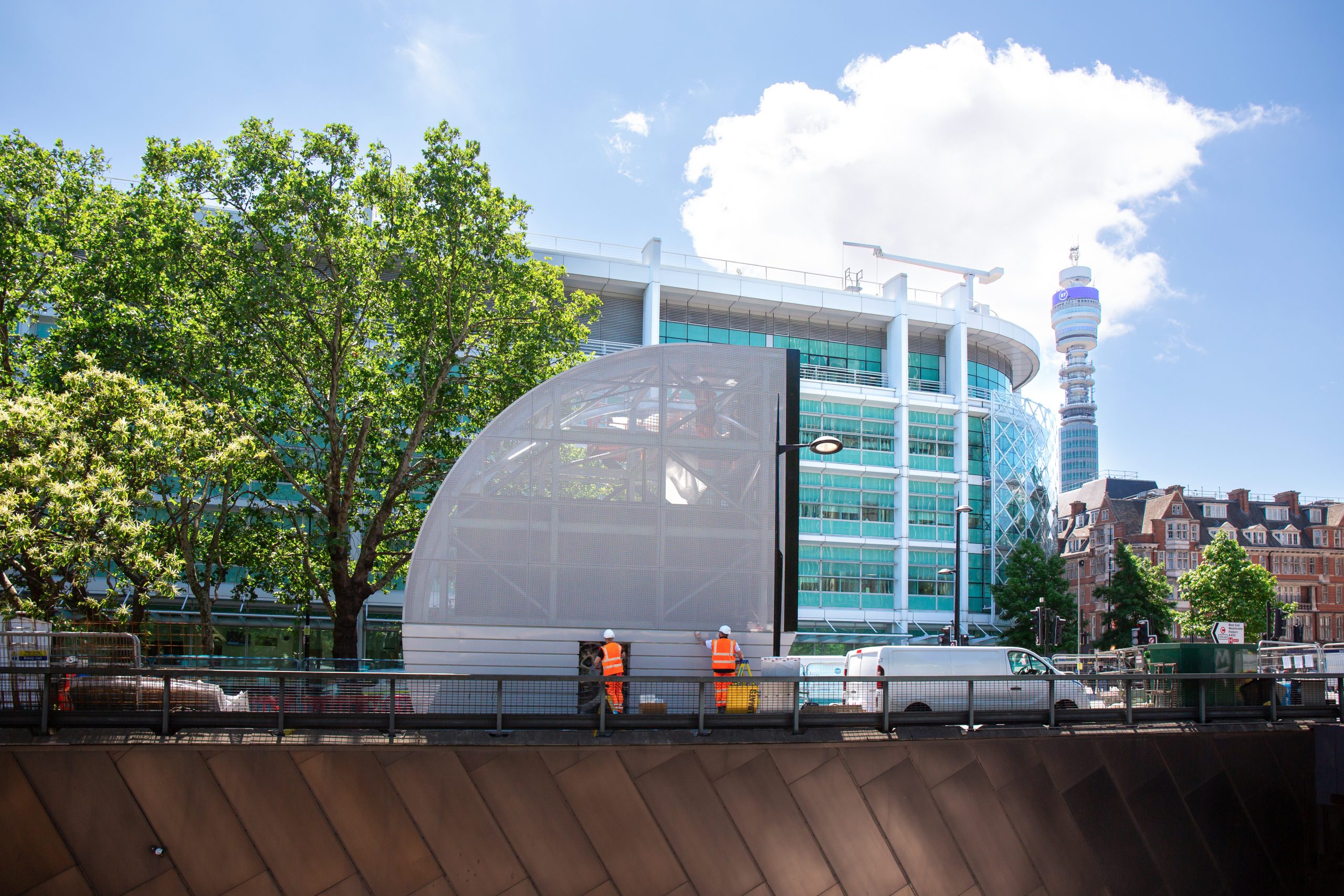
JCDecaux was installing a new structure on Euston Road, one of the capital’s busiest arterial routes. Built to carry a large LED screen and enclose an existing ventilation shaft, it’s a considered piece of street architecture in an unforgiving location for graffiti.
JCDecaux chose to get ahead of it rather than take a hit later. They had us protect every surface before it reached the street. Proactive protection like this is precisely the kind of work we’re built for.

Every surface called for a different answer.
We coated the LED screen with a silicon based anti-graffiti coating, a hard, cleanable barrier that helps protect against any paint and staining taking hold.
The perforated panels took a clear ceramic coating, protecting the surface without changing how it looks.
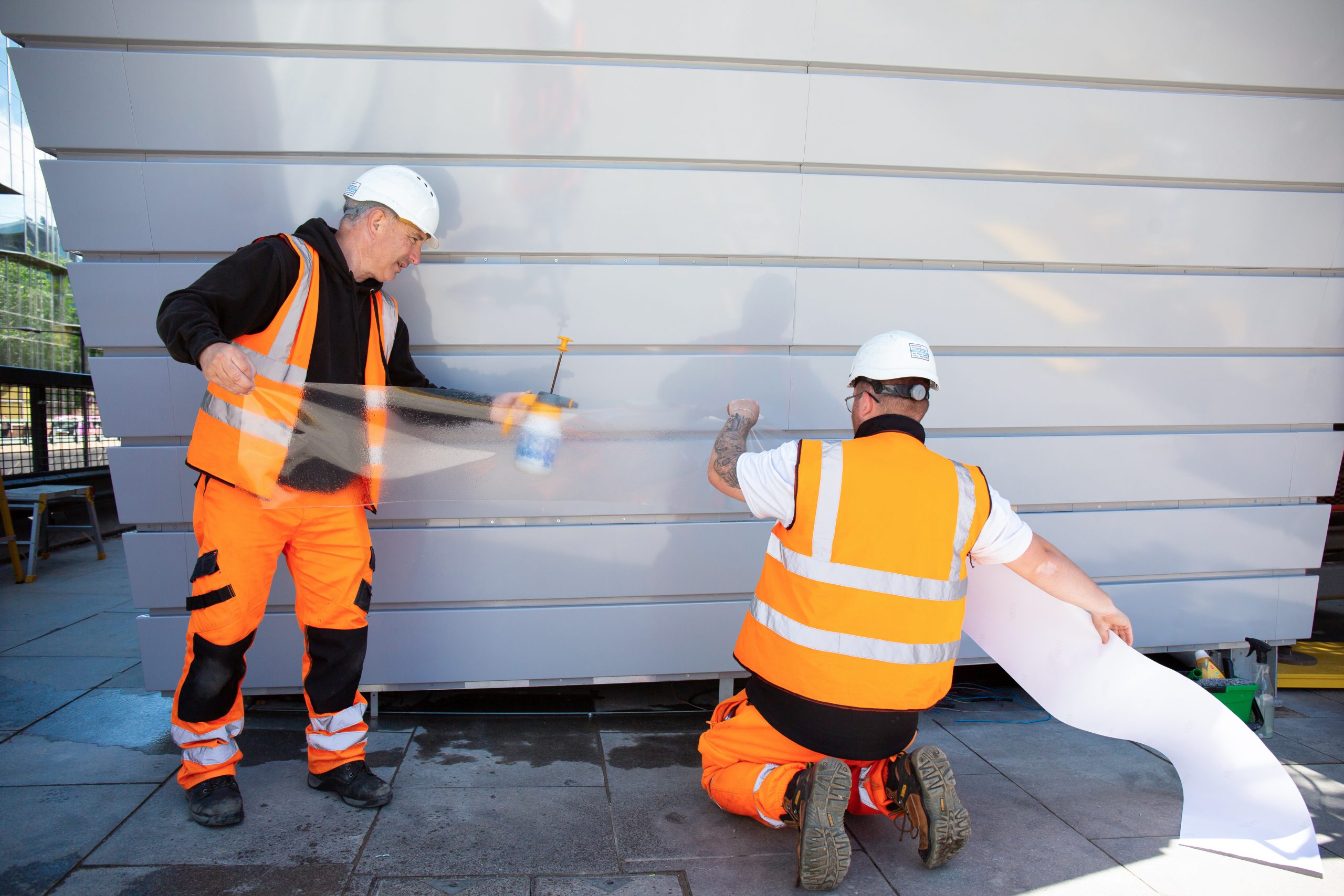
For the lower cladding, most of it within reach of the street, we fitted a protective film, ceramic coated before installation. It takes the damage so the panel beneath doesn’t have to.
The trial
We ran a full trial in Nottingham before any work began on site, proving we could meet the standard JCDecaux expected. Everything was signed off in advance, so nothing was improvised on Euston Road.
The programme moved week to week as TfL access changed. Weekly meetings with JCDecaux kept our attendance planned around it, and every element was delivered inside the agreed timeframe.
Ready for the street.
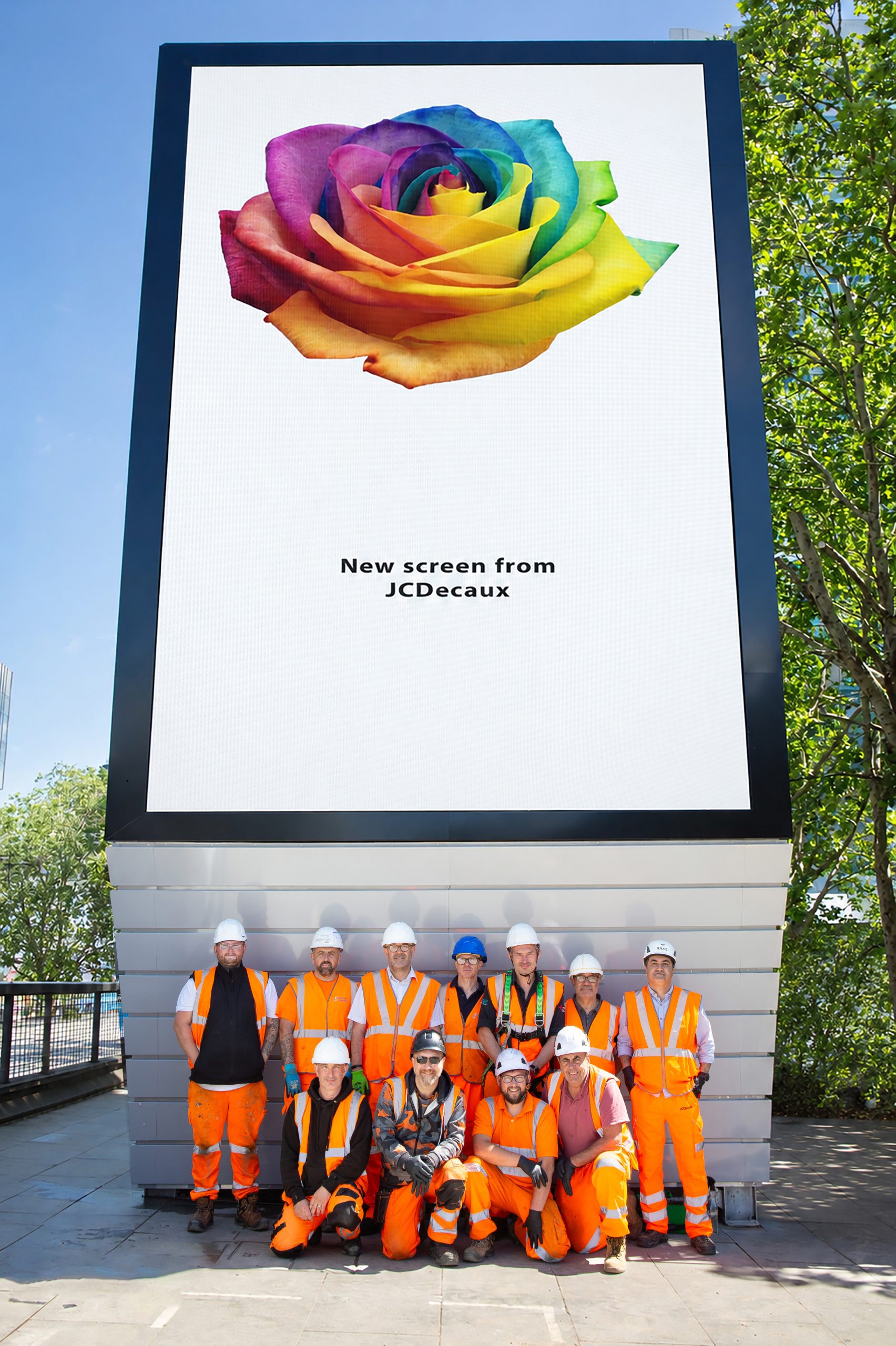
The structure reached Euston Road protected on every surface. Clean lines, an even finish and a barrier built to resist graffiti rather than wear it. In a spot that punishes exposed materials, JCDecaux opens with a structure made to hold its look.
Protection works best when it comes first. Applied before exposure, before the first tag, before the public ever arrives. On Euston Road, the structure was ready the day it went up. That is the standard.